Should I Take a Voluntary Buyout? A Worksheet to Decide
A voluntary buyout is worth taking when the payout, after tax and the extra cost of health cover, outlasts your likely job search and you accept the release. In September 2026 the median unemployed American had been out of work 11.5 weeks and the mean 24.8 weeks. A worker aged 40 or over gets at least 21 days to consider an individual waiver, 45 days in a group exit incentive or other termination program, and 7 days after signing to revoke it. Staying carries risk too: AI was the leading stated reason for US job cuts in 2026, 120,136 through September, yet total cuts fell 18% that month.
This article is not financial, tax or legal advice. It collects what agencies and statistics offices publish, so that you can check the number in your offer against your own case. Both answers can be right: a buyout that covers a long search is a good deal, and a small one that does not is a reason to stay.
The worksheet: payout against months without a job
The decision is arithmetic first. Turn the payout into the number of months of spending it covers, then compare that with how long a search takes. Copy the worksheet and fill the brackets from your offer; the example below shows a filled copy.
A. Cash in
1. Payout, gross: $[amount]
2. Unused leave paid out, gross: $[amount]
3. Gross total (1 + 2): $[amount]
4. Estimated tax rate on it: [percent] (withholding is not your final tax; ask a tax professional)
5. Net cash (3 x (1 - 4)): $[amount]

B. What you give up by leaving
6. Unvested stock or bonus you lose, gross: $[amount]
7. Its net value (6 x (1 - 4)): $[amount]

C. Your cushion
8. Net cushion (5 - 7): $[amount]
9. Monthly spending: $[amount]
10. Extra monthly cost of health cover (COBRA premium minus what you pay now): $[amount]
11. Monthly burn (9 + 10): $[amount]
12. Months covered (8 / 11): [months]

D. Compare
13. Median time unemployed, US, September 2026: 2.7 months
14. Mean time unemployed, US, September 2026: 5.7 months
15. Your expected search time, from your field and your network: [months]
16. Months covered minus expected search (12 - 15): [months]

E. Check before you sign
17. Unemployment benefits after a voluntary exit in my state: [yes / no / unknown, and the agency page]
18. Days to review the release: [days]; days to revoke after signing: [days]
19. Deadline to accept, in writing: [date]
How long is the search? The US Bureau of Labor Statistics reports the median duration of unemployment at 11.5 weeks and the mean at 24.8 weeks for September 2026, seasonally adjusted (BLS, Table A-12, 2026). Those are people unemployed that month, counted by how long they had been out of work so far, not a promise for your field. We turn weeks into months by multiplying by 12 and dividing by 52 (how we calculated).
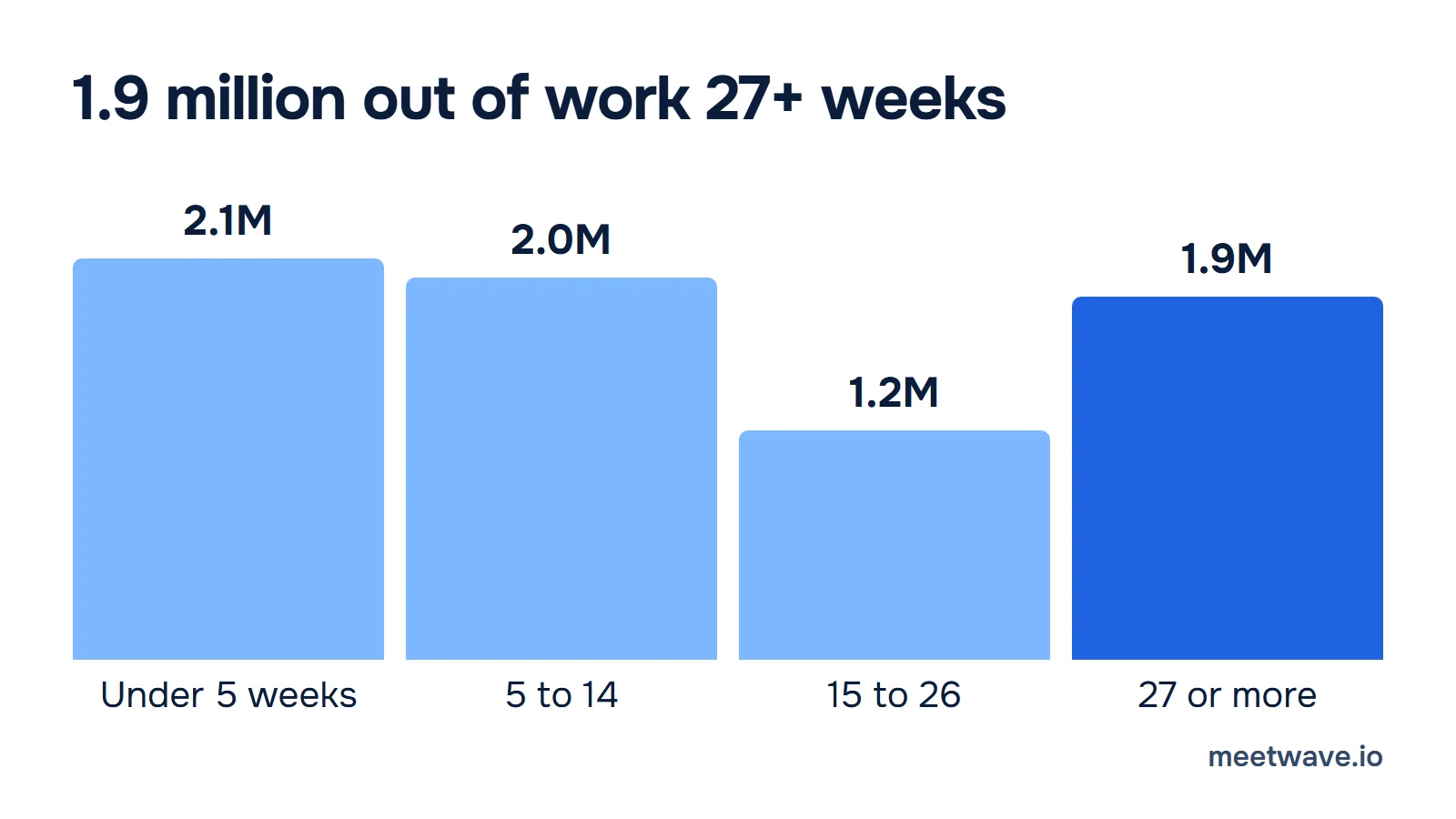
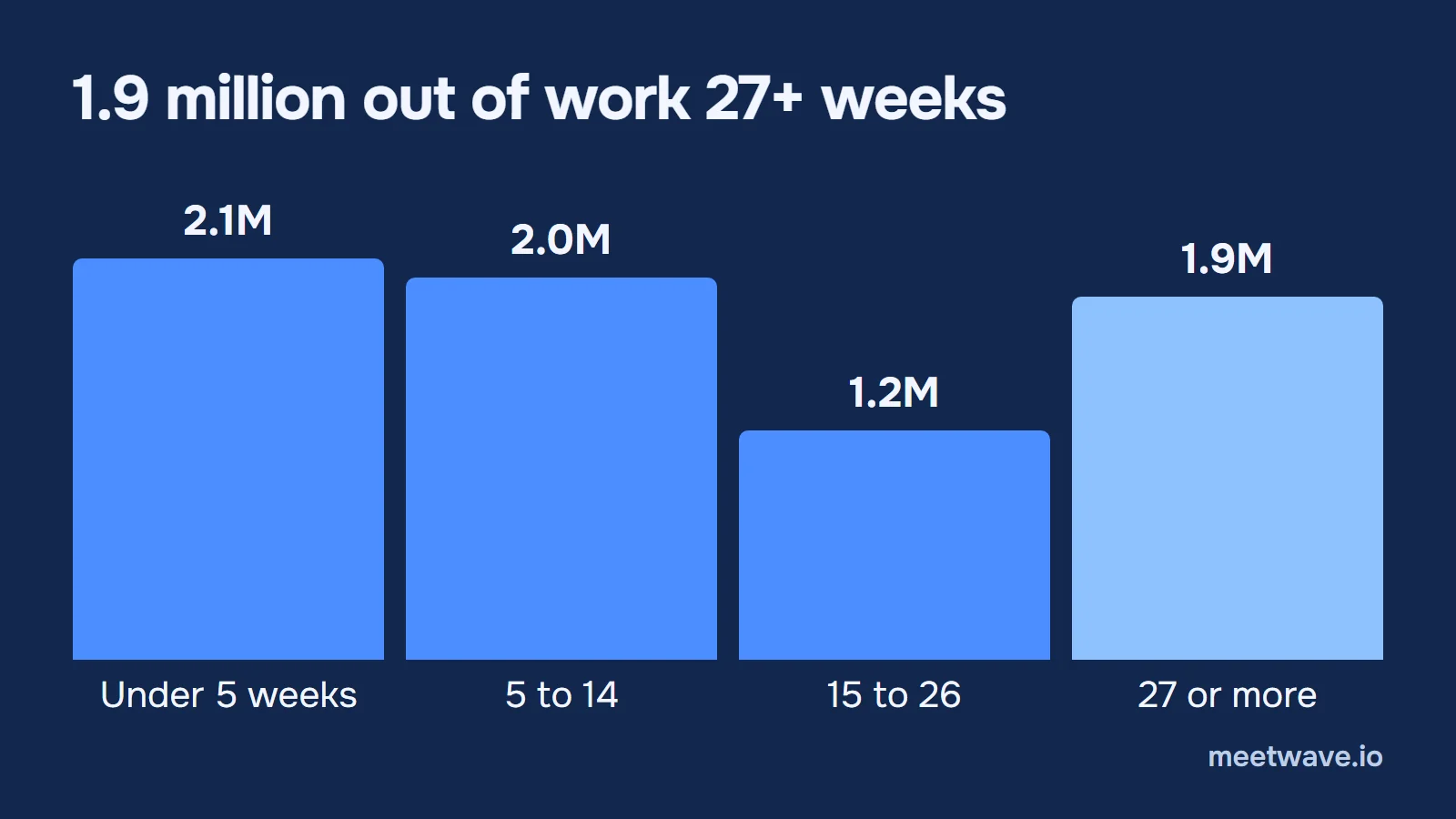 Figure 1. 1.9 million of 7.2 million unemployed Americans had been out of work 27 weeks or more. Source: US Bureau of Labor Statistics, Table A-12, September 2026.
The spread is the reason to read the mean next to the median: 1.9 million of 7.2 million unemployed had been out of work 27 weeks or more (BLS, Table A-12, 2026). A cushion sized only to the median leaves you exposed if your search is one of the long ones.
A worked example with invented, labelled inputs shows the shape. Take a $120,000 salary and an offer of 26 weeks of pay, with every other input invented (our arithmetic, inputs from the BLS table):
| Line | Invented input | Result |
|---|---|---|
| Payout, 26 weeks of pay | $60,000 | |
| Unused leave paid out | $4,000 | Gross total $64,000 |
| Tax estimate | 30% | Net cash $44,800 |
| Unvested stock lost by leaving | $9,000 gross | $6,300 net |
| Net cushion | $38,500 | |
| Monthly spending plus extra health cost | $6,000 + $1,500 | Burn $7,500 a month |
| Months covered | 5.1 | |
| Median and mean unemployment, September 2026 | 11.5 and 24.8 weeks | 2.7 and 5.7 months |
Source: MeetWave arithmetic on invented inputs; durations from BLS, Table A-12 (2026).
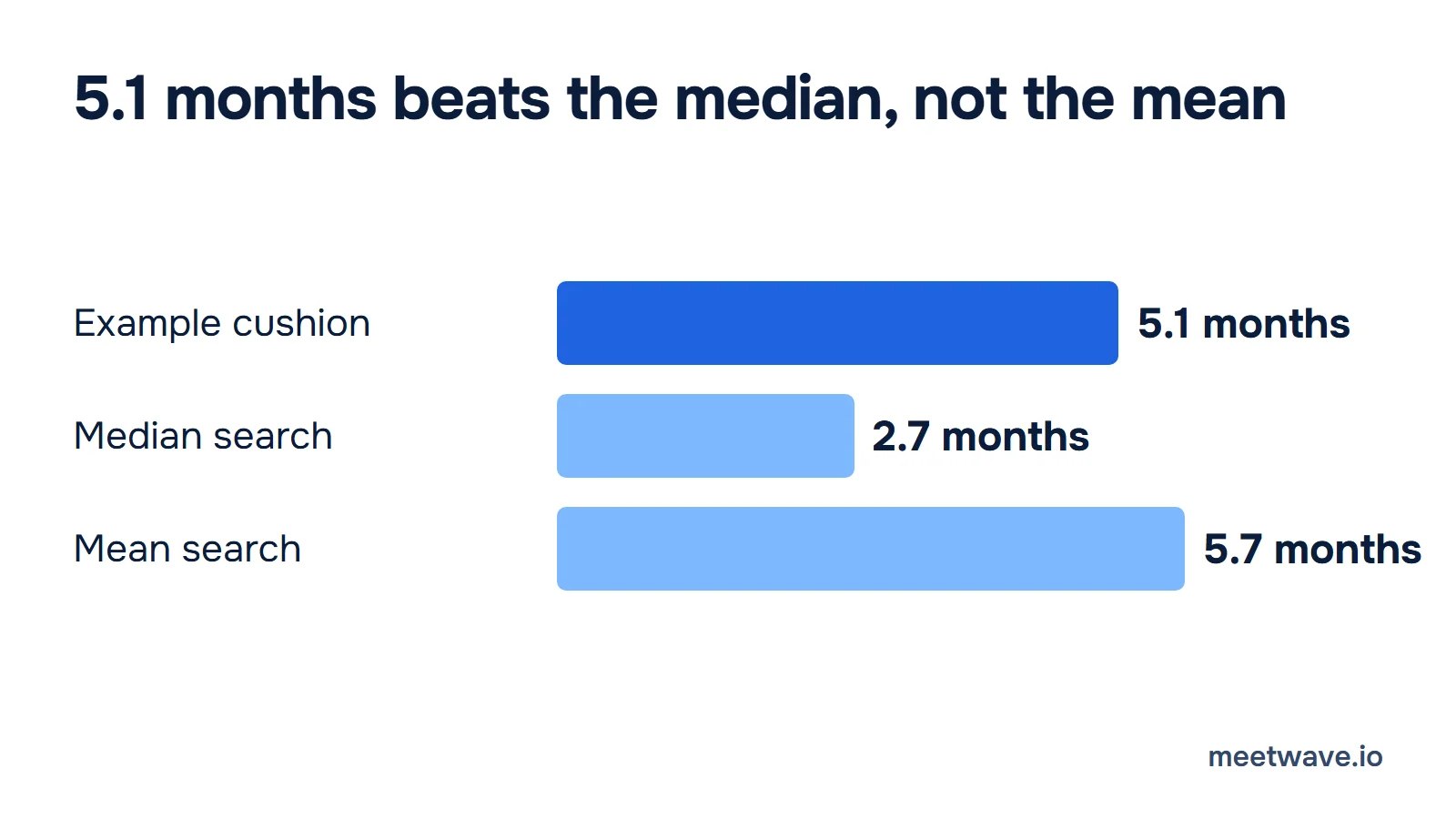
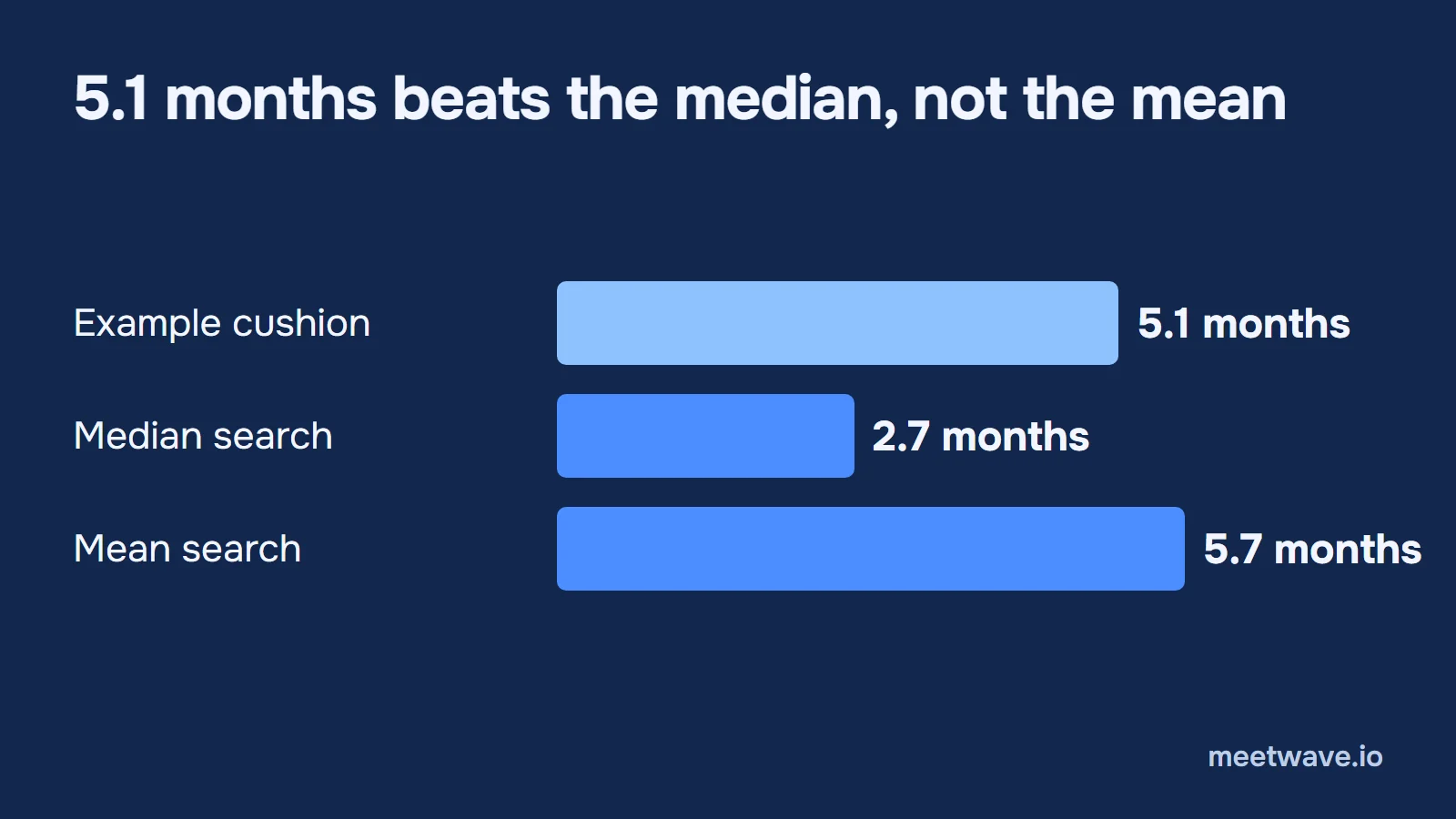 Figure 2. An example cushion of 5.1 months outlasts the median search but not the mean. Source: MeetWave calculation on invented inputs; US BLS, Table A-12, September 2026.
In this example the buyout covers the median search, 2.7 months, with room to spare, and falls 0.6 months short of the mean, 5.7 months (our arithmetic). For someone with a fast-moving field and a strong network, those numbers favour taking it. For someone who expects a long search, or who would lose a large vesting date, they favour staying. The worksheet leaves out unemployment benefits and savings; add them as extra months if they apply.
What you sign: the release
A buyout is typically paid in exchange for a signed release of claims, and a federal rule sets its minimum terms for workers aged 40 and over. The Equal Employment Opportunity Commission (EEOC) says an individual waiver must give "at least 21 days to consider the offer" and "seven days to revoke his or her signature", and must advise you in writing to consult an attorney (EEOC, Older Workers Benefit Protection Act Q&A).
When the offer is part of a group exit incentive or other termination program, the consideration period is "at least 45 days", and the employer must disclose in writing the group it chose from, the eligibility factors, the time limits and the job titles and ages of those selected and not selected (EEOC, Older Workers Benefit Protection Act Q&A). A buyout offered to many people may be such a program; you can ask HR whether it is, and for that disclosure in writing.
Two limits help you read the document. A waiver "must not include rights and claims that may arise after the date on which the waiver is executed", and an employer cannot prevent you from filing a charge with the EEOC (EEOC, Older Workers Benefit Protection Act Q&A). You may sign before the period ends only if the decision is knowing and voluntary and the employer did not induce it (EEOC, footnote 19). This page is the EEOC's guidance on one federal law; the rules for workers under 40 and state rules differ, so read the release itself and ask a lawyer about it.
Health cover, tax and unemployment
Health cover. COBRA lets people who lose group health benefits keep them for a limited time, and the Department of Labor lists "voluntary or involuntary job loss" among the qualifying events (US DOL, COBRA). You pay up to 102% of the plan's cost, so line 10 of the worksheet is up to the full premium plus 2%, minus what you pay today (US DOL, COBRA). The department's worker FAQ gives 18 months for job loss and says "You have 60 days to enroll in COBRA", counted from the later of the date coverage ends and the date you get the election notice (US DOL EBSA, COBRA FAQ). It applies to plans of employers with 20 or more employees (US DOL, COBRA).
Tax. Severance is paid like wages. The IRS states that "Severance payments are wages subject to social security and Medicare taxes, federal income tax withholding, and FUTA tax" (IRS, Publication 15, 2026). The optional flat withholding rate on supplemental wages is 22%; the rate is 37% on the part of a year's supplemental wages above $1 million (IRS, Publication 15, 2026). Withholding is a prepayment, not your final tax, which is why line 4 of the worksheet is your own estimate.
Unemployment. Unemployment insurance is state law: "Each state sets its own unemployment insurance benefits eligibility guidelines" (US DOL, Unemployment Insurance). The same page says that in most states you must have left your last job for a reason tied to the employer's lack of work (US DOL, Unemployment Insurance). We did not find an agency page that says how a voluntary buyout is treated, so do not assume either answer.
What the state agencies we opened do say is about quitting. Washington: "If you quit for good cause, you may be eligible for unemployment benefits" (Washington ESD, You quit your job). California: "If you quit, you need to show that you had a good reason" (California EDD, Eligibility). Neither page covers voluntary layoffs or severance, so call your state agency before you accept and write down what it says.
Timing matters too. New York counts severance received within 30 days of your last day as possibly affecting benefits, and says payments for accrued leave and health insurance are not dismissal pay (New York State Department of Labor, P825). Whether your state does the same is a question for its agency; put the answer on line 17.
The odds if you stay
Declining a buyout carries risk too, and nobody can tell you your own odds. The public numbers are national and describe announced cuts, not your team. Challenger, Gray & Christmas counted 573,195 announced US job cuts through September 2026, down 39% from 946,426 a year earlier (Challenger, Gray & Christmas, 2026).
AI is the leading stated reason: 120,136 of those cuts, about 21%, ahead of market and economic conditions at 114,124 (Challenger, Gray & Christmas, 2026). Read it as what employers say, not as proof of cause.
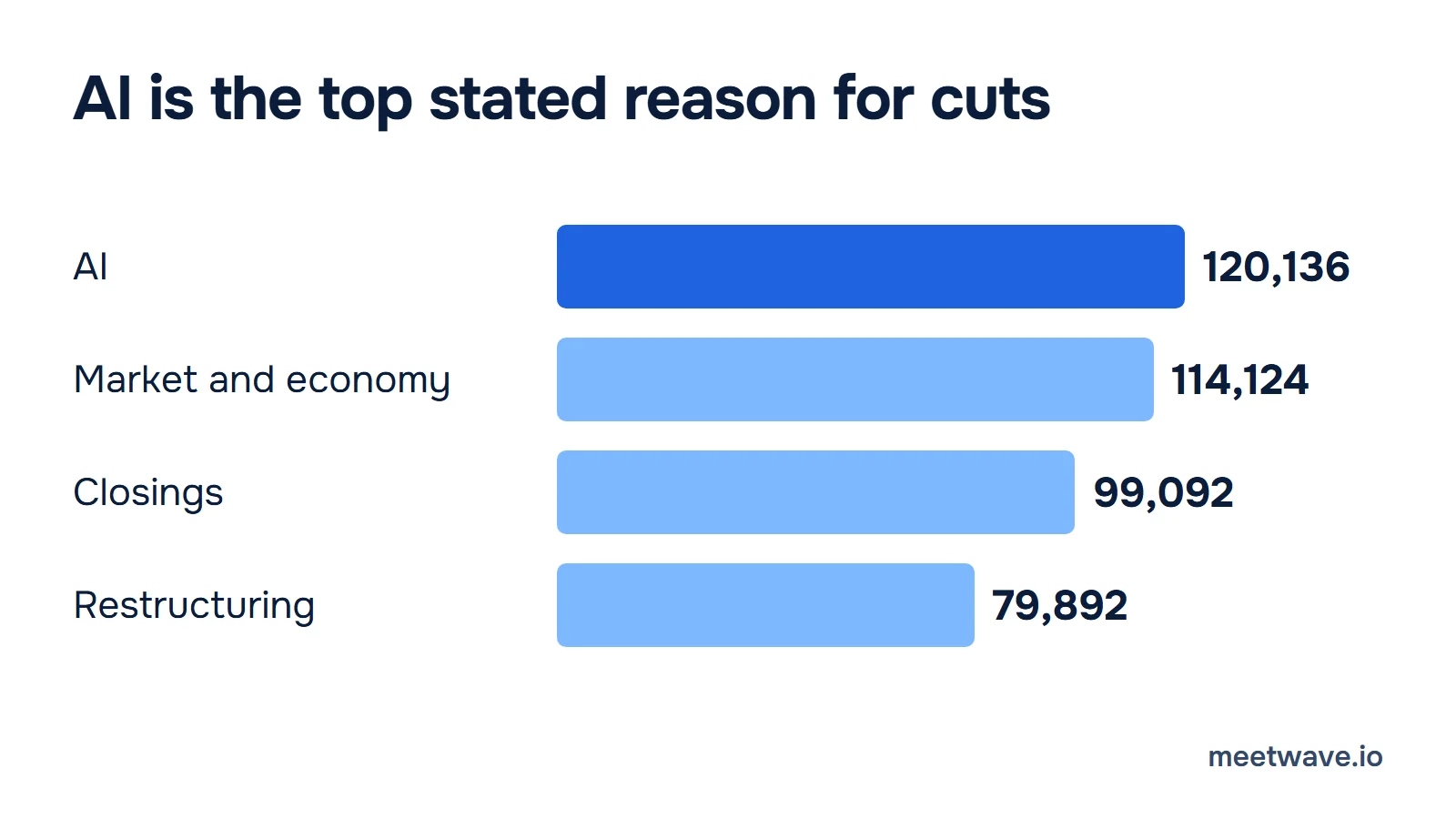
 Figure 3. AI is the leading stated reason for 2026 US job cuts, 120,136 of 573,195 through September. Source: Challenger, Gray & Christmas, 2026.
The counterpoint: September's total fell. Employers announced 43,281 cuts, down 18% from 52,881 in August, and AI was cited in 3,961 of them, about 9% of the month (Challenger, Gray & Christmas, 2026). One month does not make a trend in either direction. A later layoff, if it comes, may also arrive with a smaller offer than the one on your desk, but no source we opened measures that, so treat it as a question for HR, not a fact.
Questions to ask HR, in writing
Ask for answers by email. A spoken answer from one person is hard to hold anyone to, and a written one is a record you can reread against the release. Copy the list and send the ones that apply.
Subject: Questions about my buyout offer, deadline [date]

Hi [name],

Before I decide, please confirm these in writing:

1. Is this a group exit incentive program? If so, please send the written disclosure: the eligible group, the eligibility factors, the time limits, and the job titles and ages of those eligible and selected.
2. How many days do I have to consider the release, and how many days to revoke after signing?
3. What is my last day of employment, and what is paid up to it?
4. Is the payout a lump sum or paid over time? What is the gross amount, and how is it calculated?
5. How are unused leave and any bonus treated?
6. What happens to my unvested stock and my vesting dates?
7. When does my health cover end, and what will COBRA cost per month?
8. How will you describe my separation to the state unemployment agency?
9. Does the release cover anything beyond claims up to the signing date?
10. May I have the full agreement now, and is there a copy with the terms for my location?
11. Can the deadline move if I need more time to review?

Thank you,
[your name]
If it is not a buyout: the layoff meeting
Sometimes the invite says "role update" and the meeting turns out to be a termination. The same worksheet applies, and a group layoff gets the same 45 days as a group exit incentive. You have no way to know whether it is a group program, and a decision made in the room under pressure is the one most worth delaying.
Nothing in the EEOC guidance requires signing in the meeting for workers 40 and over, and many people ask for the agreement and the deadline in writing and take the document with them. For workers 40 and over, the EEOC rules above set the minimum review and revocation periods, and signing early is allowed only if the decision is knowing and voluntary and the employer did not induce it (EEOC, footnote 19). Ask what your last day is and when your health cover ends, and check the COBRA clock: you have 60 days to enroll, counted from the later of the date coverage ends and the date you get the election notice (US DOL EBSA, COBRA FAQ).
Then write down what was said while you still remember it. A meeting minutes template has the fields: who was present, what each person said, what was promised, and the dates. Use the list below and send a two-line recap email to HR.
Date, time and length of the meeting: [..]
Who was in the room or on the call (name and role): [..]
What they said the decision was, in their words: [..]
Last day of employment: [date]
What they said about pay, leave, stock and health cover: [..]
What I was asked to sign, and by when: [date]
What they said I could not do or could not take: [..]
Questions I asked and the answers I got: [..]
Questions they could not answer, to ask in writing: [..]
Recording the conversation: consent first
Some states require everyone's consent to record, so ask first (rules by state). US federal law generally lets a person record a conversation they are part of, unless it is done for a criminal or tortious purpose (18 U.S.C. § 2511(2)(d)), but some states, Washington among them, require "the consent of all the persons engaged in the conversation" for a private conversation (RCW 9.73.030). If HR agrees to a recorded session, MeetWave can transcribe your side and theirs on your device, with no bot joining the call, and give you the promises and dates as notes. If HR declines, the written questions and the notes list above do the same job.
Microsoft and Skydance, one dated box
As of 2026-10-30.
Microsoft offered voluntary buyouts to about 60,000 employees in Canada, India, the United Kingdom and the United States at level 70 and below, in participating teams only (Reuters via NBC News, 2026-10-26). A spokesperson said the offer is comparable to its standard severance package, which varies by market (KUOW, 2026-10-26). Employees decide in early December and those who accept leave on December 31, according to a person familiar with the matter (CNBC, 2026-10-26). The reports we opened do not state payout amounts, so read the terms in your own offer.
Skydance told staff on 2026-10-26 that it is offering voluntary, one-time buyouts to some employees, and that everyone must work in the office five days a week, phased in by location; eligible employees get individual notices (NBC Los Angeles, 2026-10-26).
Key numbers
- The median duration of unemployment in the US was 11.5 weeks and the mean 24.8 weeks in September 2026, seasonally adjusted (US Bureau of Labor Statistics, Table A-12, 2026).
- 1.9 million of 7.2 million unemployed Americans had been out of work 27 weeks or more in September 2026 (US Bureau of Labor Statistics, Table A-12, 2026).
- A waiver for workers aged 40 or over must give at least 21 days to consider, or 45 days in a group exit incentive or other termination program, plus 7 days to revoke (EEOC, Older Workers Benefit Protection Act Q&A, 2009).
- COBRA premiums can reach up to 102% of the plan's cost (US Department of Labor, COBRA, 2026), and you have 60 days to enroll, counted from the later of coverage end and the election notice (US DOL EBSA, COBRA FAQ, 2026).
- AI was the stated reason for 120,136 announced US job cuts from January to September 2026, the leading reason, out of 573,195 (Challenger, Gray & Christmas, 2026).
- Announced US job cuts fell 18% in September 2026, to 43,281 from 52,881 in August (Challenger, Gray & Christmas, 2026).
How we calculated
The worked example is invented. Salary $120,000 divided by 52 weeks, times 26 weeks, is a $60,000 payout; adding $4,000 of leave gives $64,000 gross. At an assumed 30% tax, net cash is $64,000 x 0.70 = $44,800. Unvested stock of $9,000 gross given up is $9,000 x 0.70 = $6,300 net, so the cushion is $44,800 - $6,300 = $38,500. Spending of $6,000 plus $1,500 of extra health cost is $7,500 a month, and $38,500 / $7,500 = 5.13, shown as 5.1 months. None of these inputs is a statistic about anyone, and the only sourced input is the duration data (BLS, Table A-12).
The comparison uses the BLS seasonally adjusted values for September 2026, 11.5 weeks (median) and 24.8 weeks (mean) (BLS, Table A-12). Weeks become months as weeks x 12 / 52: 11.5 gives 2.65, shown as 2.7, and 24.8 gives 5.72, shown as 5.7. The 0.6-month shortfall is 5.72 minus 5.13, computed from unrounded values. The 7.2 million is the sum of the four seasonally adjusted duration groups in the same table, 2,098 + 1,956 + 1,189 + 1,944 thousand = 7,187 thousand; 1.9 million is the 1,944 thousand group. Calculated 2026-10-30.
FAQ
Should I take a voluntary buyout?
The numbers favour taking it if the net payout, minus what you give up by leaving, covers your expected search and the extra cost of health cover, and you accept the release. The median unemployed American had been out of work 11.5 weeks in September 2026 and the mean 24.8 weeks (BLS, 2026); the worksheet puts your numbers next to those.
Can I collect unemployment after a voluntary buyout?
It depends on your state. Eligibility is set state by state (US DOL, 2026), and the Washington and California pages we opened address quitting, not buyouts (Washington ESD, 2026; California EDD, 2026). Ask your state agency before you sign.
Do I have to sign a severance agreement right away?
For workers aged 40 or over, federal rules require at least 21 days to consider an individual waiver, 45 in a group exit incentive or other termination program, and 7 days to revoke (EEOC, 2009). The EEOC page sets no such period for workers under 40, so you can ask for time to review and for the deadline in writing.
Is a voluntary buyout taxed?
Yes, like wages: severance is subject to social security and Medicare taxes and income tax withholding, and the optional flat withholding rate on supplemental wages is 22% (IRS, Publication 15, 2026). The final tax depends on your whole year.
What is the difference between a buyout and a layoff?
The EEOC describes exit incentive programs as voluntary and other termination programs as involuntary, both offering extra pay to more than one employee (EEOC, 2009). In a buyout you can say no; a layoff is the employer's decision.
Do I keep my health insurance?
Not from the employer's plan on the same terms, but COBRA lets you continue group cover for a limited time, up to 18 months after job loss, at up to 102% of the plan's cost (US DOL, 2026; US DOL EBSA, 2026).
Sources
- US Bureau of Labor Statistics — Table A-12. Unemployed persons by duration of unemployment (2026, September data). Accessed 2026-10-30.
- Challenger, Gray & Christmas — Job cuts fall in September, hiring plans up 3% over 2025 (2026). Accessed 2026-10-30.
- US Equal Employment Opportunity Commission — Understanding Waivers of Discrimination Claims in Employee Severance Agreements (2009). Accessed 2026-10-30.
- US Department of Labor — Continuation of Health Coverage (COBRA) (2026). Accessed 2026-10-30.
- US Department of Labor, Employee Benefits Security Administration — COBRA continuation health coverage: FAQs for workers (2026). Accessed 2026-10-30.
- Internal Revenue Service — Publication 15, Employer's Tax Guide (2026). Accessed 2026-10-30.
- US Department of Labor — Unemployment Insurance (2026). Accessed 2026-10-30.
- Washington Employment Security Department — You quit your job (2026). Accessed 2026-10-30.
- California Employment Development Department — Unemployment eligibility (2026). Accessed 2026-10-30.
- New York State Department of Labor — Dismissal or severance pay and your unemployment insurance benefit, P825 (2022). Accessed 2026-10-30.
- Reuters via NBC News — Microsoft offers buyouts to around 60,000 employees to contain costs (2026). Accessed 2026-10-30.
- KUOW — Microsoft offers voluntary buyouts to a quarter of its workforce (2026). Accessed 2026-10-30.
- CNBC — Microsoft offers voluntary buyouts as AI leads to efficiency push (2026). Accessed 2026-10-30.
- NBC Los Angeles — Skydance offers employee buyouts following Warner Bros. merger (2026). Accessed 2026-10-30.
- Legal Information Institute — 18 U.S. Code § 2511 (2026). Accessed 2026-10-30.
- Washington State Legislature — RCW 9.73.030 (2026). Accessed 2026-10-30.
Still comparing tools?
See how MeetWave stacks up against the tools most teams evaluate alongside it.
- MeetWave vs GranolaSee how MeetWave compares to Granola for bot-free meeting notes
- MeetWave vs TactiqSee how MeetWave compares to Tactiq for meeting transcripts
- MeetWave vs NottaSee how MeetWave compares to Notta for meeting transcription
More on this: Meeting minutes template